
The short answer
A new AC makes sense when your home has no cooling, your current system can no longer keep up, or repairs have become frequent and major. We start with a load calculation and an inspection of your ducts, electrical service, and equipment location, then lay out repair and replacement options so you can choose.
A new air conditioner is a big decision, and in the Santa Clara Valley it is shaped by our climate: dry summers that get noticeably hotter as you move inland and south, and mild, damp winters. RapidBreeze HVAC Repair Service installs central air conditioners, heat pumps, and ductless systems for homeowners in San Jose and nearby cities. This page explains when installation makes sense, what we look at before recommending equipment, how we weigh repair against replacement, what changes the cost of a project, and what to expect when we come out.
Signs You May Need a New Air Conditioner
Not every cooling problem means you need new equipment. A clogged filter, a failed capacitor, or a low refrigerant charge can often be fixed in one visit. But some signs point toward installation rather than another repair.
If several of the items below sound familiar, an installation estimate is a reasonable next step.
- Your home has no central cooling, and summer afternoons are uncomfortable, especially in the hotter inland and southern parts of the valley.
- The system runs for long stretches but some rooms never cool down.
- Repairs are becoming frequent, or a major part such as the compressor has failed.
- The unit uses an older refrigerant that is increasingly hard to find and service.
- Your summer energy bills keep climbing even though you use the system the same way.
- The outdoor unit grinds, rattles, or buzzes, or ice forms on the refrigerant lines.
- You are replacing a furnace and want to consider a heat pump that handles both heating and cooling.
What We Check Before Recommending a System
The right system depends on your house, not just its square footage. An oversized unit cools in short bursts, leaves the air clammy, and wears out faster. An undersized one runs constantly and still falls behind on hot days. Before we suggest any equipment, we look at how your home gains and loses heat and whether its existing infrastructure can support a new system.
These checks take time, but they are what keep a new system from becoming a new problem.
- Cooling load: room sizes, ceiling heights, window area and direction, insulation, and how much afternoon sun the house gets.
- Ductwork: leaks, crushed or disconnected runs, poor insulation in the attic or crawlspace, and whether duct sizes match the airflow a new system needs.
- Electrical service: panel capacity, breaker size, and wiring to the outdoor unit.
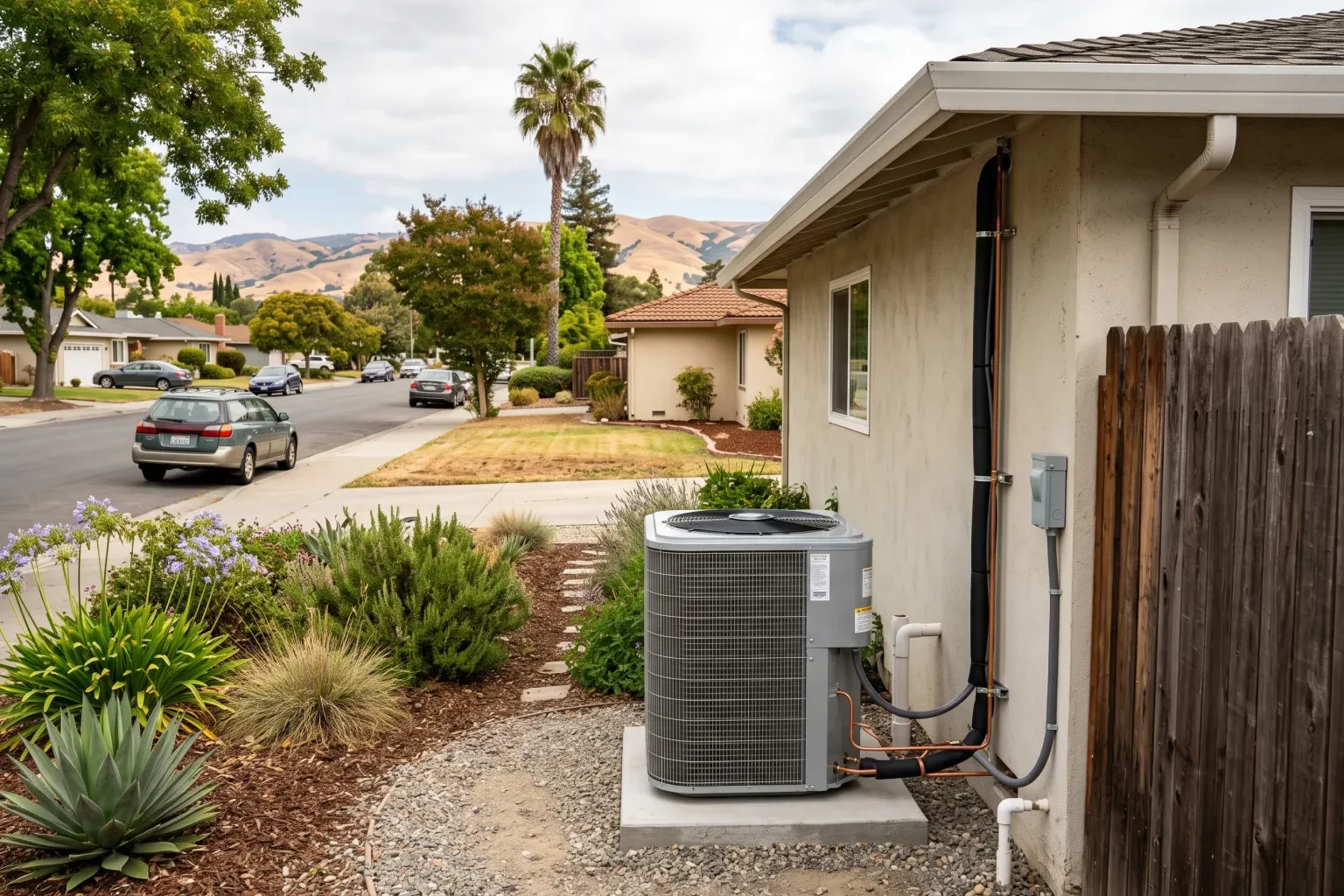
- Outdoor unit location: clearance for airflow and service, distance from bedrooms and neighbors, and a level, stable pad.
- Indoor equipment: whether your furnace or air handler is compatible with a new outdoor unit or should be replaced at the same time.
- Condensate drainage and thermostat compatibility.
Repair or Replace: Your Options
When your current system still works, we will tell you whether a repair is reasonable. We weigh the age and condition of the equipment, the cost of the repair compared with what replacement would involve, how often it has needed service, and how well it has been keeping your home comfortable.
If replacement makes sense, there is usually more than one path. You can replace the outdoor unit and indoor coil as a matched set, replace the full system including the furnace or air handler, switch to a heat pump that provides both heating and cooling, or add a ductless mini-split for a home without ducts, a converted garage, or an addition. We explain the trade-offs of each so you can decide.
Local rules matter here, but they do not force anyone's hand. The Bay Area Air District appliance rules do not require you to replace working equipment; they apply only when a furnace or water heater fails or is replaced. Gas furnaces manufactured from 2029 must meet a zero-NOx standard, which in practice points homeowners toward heat pumps when a furnace is replaced after that date. If your furnace is aging, it can make sense to plan for that now.
On incentives: the federal Energy Efficient Home Improvement Credit covered qualifying heat pumps placed in service before December 31, 2025, and is not available for new installations after that date. BayREN and local clean energy providers may offer heat pump and electrification incentives, but amounts and availability change by funding cycle, so we confirm the current offer before including it in a quote.
What Affects the Cost of AC Installation
Every installation is priced for the specific home, which is why we give a written estimate after seeing the house rather than a number over the phone. These are the main factors that move the cost up or down.
- Type of system: central AC, heat pump, or ductless mini-split.
- Size and efficiency: larger capacity and higher efficiency ratings generally cost more up front but may cost less to run.
- Ductwork: whether existing ducts can be reused as is, need sealing and repairs, or need partial or full replacement.
- Electrical work: panel upgrades, new circuits, or new wiring to the outdoor unit.
- Indoor equipment: whether the furnace or air handler is being replaced at the same time.
- Access: tight attics, crawlspaces, and long line runs add labor.
- Permits and inspection required by your city.
- Thermostat, air filtration, and other add-ons you choose.
- Removal and disposal of old equipment and refrigerant.
- Any incentives currently available for the equipment you select.
How an Installation Visit Works
First, we schedule an in-home assessment at a time that works for you. A technician walks the house, asks how the current system has been performing and which rooms give you trouble, and completes the checks described above.
Next, we put together a written estimate with one or more options. We go over the differences in plain terms, including what each option does well and where it falls short, and answer your questions. There is no pressure to decide on the spot.
On installation day, we protect floors and work areas, remove the old equipment, and install the new system. We set the outdoor unit, connect refrigerant lines and wiring, make any planned duct or electrical changes, and connect the thermostat.
Before we leave, we start the system, check refrigerant charge, airflow, and temperature split, and confirm the condensate drains properly. We show you how to use the thermostat, explain filter changes, and schedule any required city inspection.
AC Installation by city
- AC Installation in Santa ClaraLocal service & repairs
- AC Installation in CampbellLocal service & repairs
- AC Installation in SunnyvaleLocal service & repairs
- AC Installation in CupertinoLocal service & repairs
- AC Installation in MilpitasLocal service & repairs
- AC Installation in SaratogaLocal service & repairs
- AC Installation in Monte SerenoLocal service & repairs
- AC Installation in Los GatosLocal service & repairs
- AC Installation in Mountain ViewLocal service & repairs
- AC Installation in Los AltosLocal service & repairs
- AC Installation in FremontLocal service & repairs
- AC Installation in Los Altos HillsLocal service & repairs