
The short answer
Duct cleaning makes sense when an inspection finds real buildup, debris from construction, pest activity, or moisture problems, not just because time has passed. We inspect first, then recommend cleaning, sealing, repairing, or replacing only the sections that need it.
Not every home needs its ducts cleaned on a fixed schedule, and we won't tell you yours does without looking first. Ducts that are sealed well and paired with a good filter can stay reasonably clean for a long time. Ducts that leak, sit in a dusty attic or crawlspace, or went through a remodel can collect debris that ends up back in your rooms. In the Santa Clara Valley, dry summers bring fine dust that gets pulled through any gap in the system. Mild, damp winters can leave moisture in crawlspaces where ductwork often runs. At RapidBreeze HVAC Repair Service, we start with an inspection. Then we tell you plainly whether cleaning, sealing, repair, or replacement is the right next step, or whether you can leave things alone for now.
Signs Your Ducts May Need Cleaning
Dust on a supply register by itself doesn't prove your ducts are dirty. Household dust settles everywhere, and a little around the vents is normal. What matters is a pattern of signs, or one clear problem you can see. These are the situations where we usually recommend a closer look.
If you notice a musty smell when the system starts, or you see anything that looks like mold near a vent, don't ignore it. Moisture in ductwork is a separate problem that cleaning alone won't fix. The source of the water has to be found too.
- Visible clumps of dust, lint, or debris inside registers or return grilles
- A puff of dust from the vents when the blower turns on
- Recent remodeling, drywall work, or sanding while the system was running
- Signs of rodents or insects, such as droppings, nesting material, or odors near vents
- Musty smells or suspected mold growth on or near duct openings
- Filters that clog much faster than they used to
- Rooms that stay dustier than the rest of the house even after regular cleaning
What We Check During a Duct Inspection
A duct inspection looks at more than whether the inside is dusty. Much of the debris problem in Bay Area homes comes from leaks that pull in attic or crawlspace air. So we look at the condition of the whole system, not just the surface buildup. Where we can safely reach them, we look inside the duct runs with a light or camera.
- Buildup inside supply and return ducts, plenums, and the blower area
- Disconnected, crushed, kinked, or sagging flexible duct runs
- Gaps at joints, boots, and the connection to the furnace or air handler
- Torn or missing insulation on ducts in attics, garages, and crawlspaces
- Signs of moisture, condensation, or water staining around ductwork
- Evidence of pests getting in through damaged sections
- Filter fit and whether air is bypassing the filter entirely
- Return air sizing, since starved returns can pull dust in through leaks
Repair vs. Replace: Your Options
Many duct systems only need cleaning plus a few targeted repairs. Common fixes include reconnecting loose runs, sealing leaky joints with mastic or approved foil tape, replacing a crushed section, and adding or repairing insulation. These repairs keep dust out and help conditioned air reach the rooms it's meant for.
Replacement makes more sense when the ductwork is badly deteriorated, heavily contaminated, poorly sized for the house, or made of old flex duct with brittle or failing jackets. Cleaning a system that keeps pulling in attic dust through dozens of leaks usually just buys time. In those cases we may suggest replacing some or all of the runs.
If you're also thinking about your heating equipment, it's worth planning the ducts at the same time. Under Bay Area Air District rules, natural gas furnaces manufactured from 2029 must meet a zero-NOx standard. In practice, that points many homeowners toward heat pumps when they replace a furnace after that date. The rules do not require you to replace working equipment. But if a heat pump is in your future, we can check whether your ducts are sized and in good enough shape to work with one.
What Affects the Cost of Duct Cleaning
We give you a written estimate after the inspection, so you know the scope before any work begins. The cost depends on the size and condition of your system and how much access we have. These are the main factors.
- Home size and the number of supply and return vents
- Where the ducts run: attic, crawlspace, garage, or inside walls and ceilings
- How easy it is to reach the ducts, including tight crawlspaces or low attics
- How much debris is present and what kind, such as construction dust versus pest contamination
- Whether the furnace or air handler, blower, and coil also need cleaning
- Repairs found during inspection, like sealing, reconnecting, or replacing sections
- Whether insulation needs to be repaired or added
- Whether partial or full duct replacement is the better choice
How a Duct Cleaning Visit Works
We schedule a time that works for you and arrive ready to protect your floors and furniture. First we inspect the system and walk you through what we found, with photos when we can get them. You decide what you want done before we start.
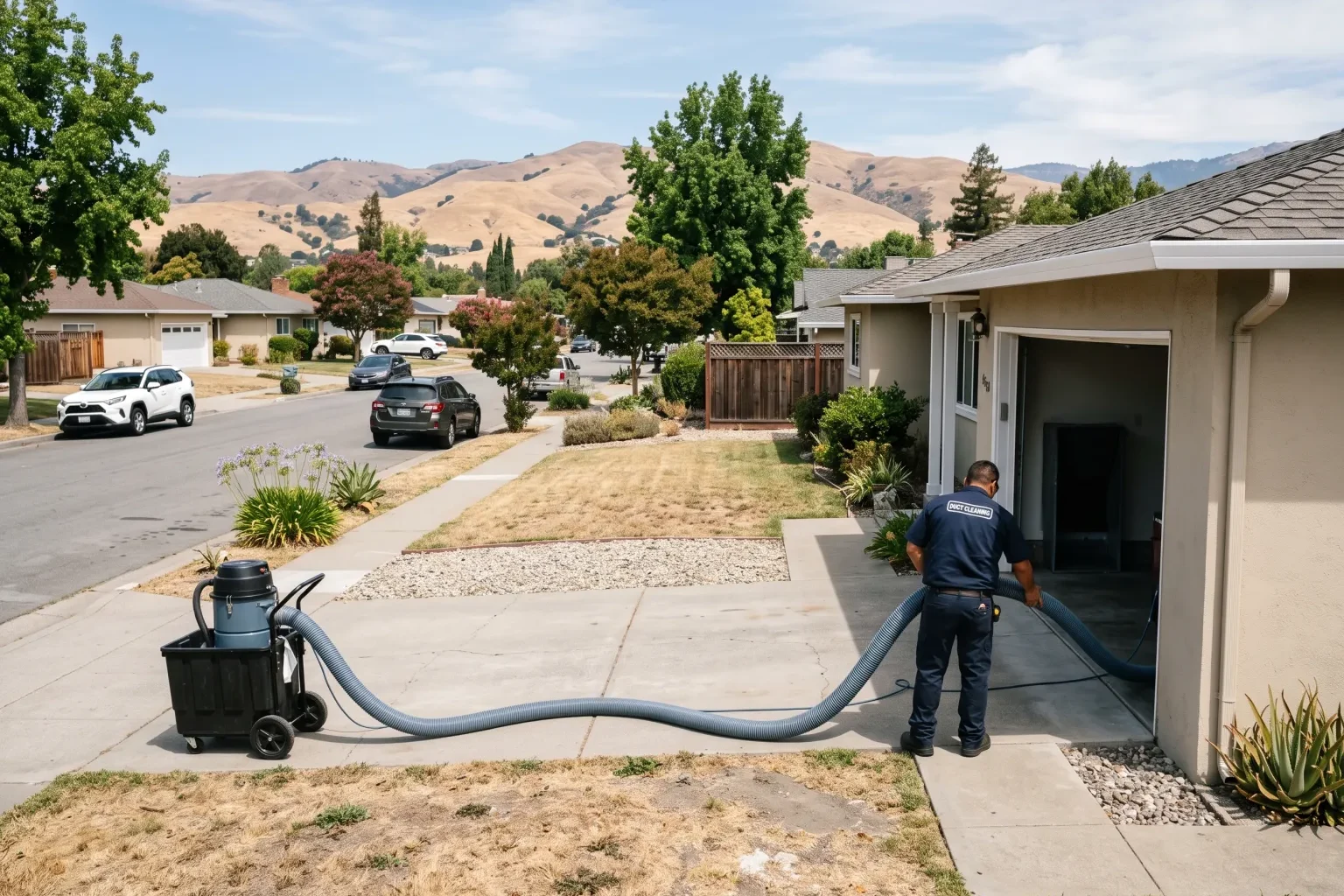
For cleaning, we connect a negative-pressure vacuum to the system so loosened debris is pulled out instead of blown into your rooms. We cover registers and use brushes, air whips, or agitation tools to loosen buildup in each run. We also clean register covers and, when included, the blower compartment. Any repairs you approve, like sealing joints or fixing disconnected runs, are done during the same visit when possible.
Before we leave, we replace or recommend the right filter, run the system to check airflow, and point out anything you should watch for. If we find a larger issue, like moisture or ductwork that should be replaced, we explain your options and let you take time to decide.