
The short answer
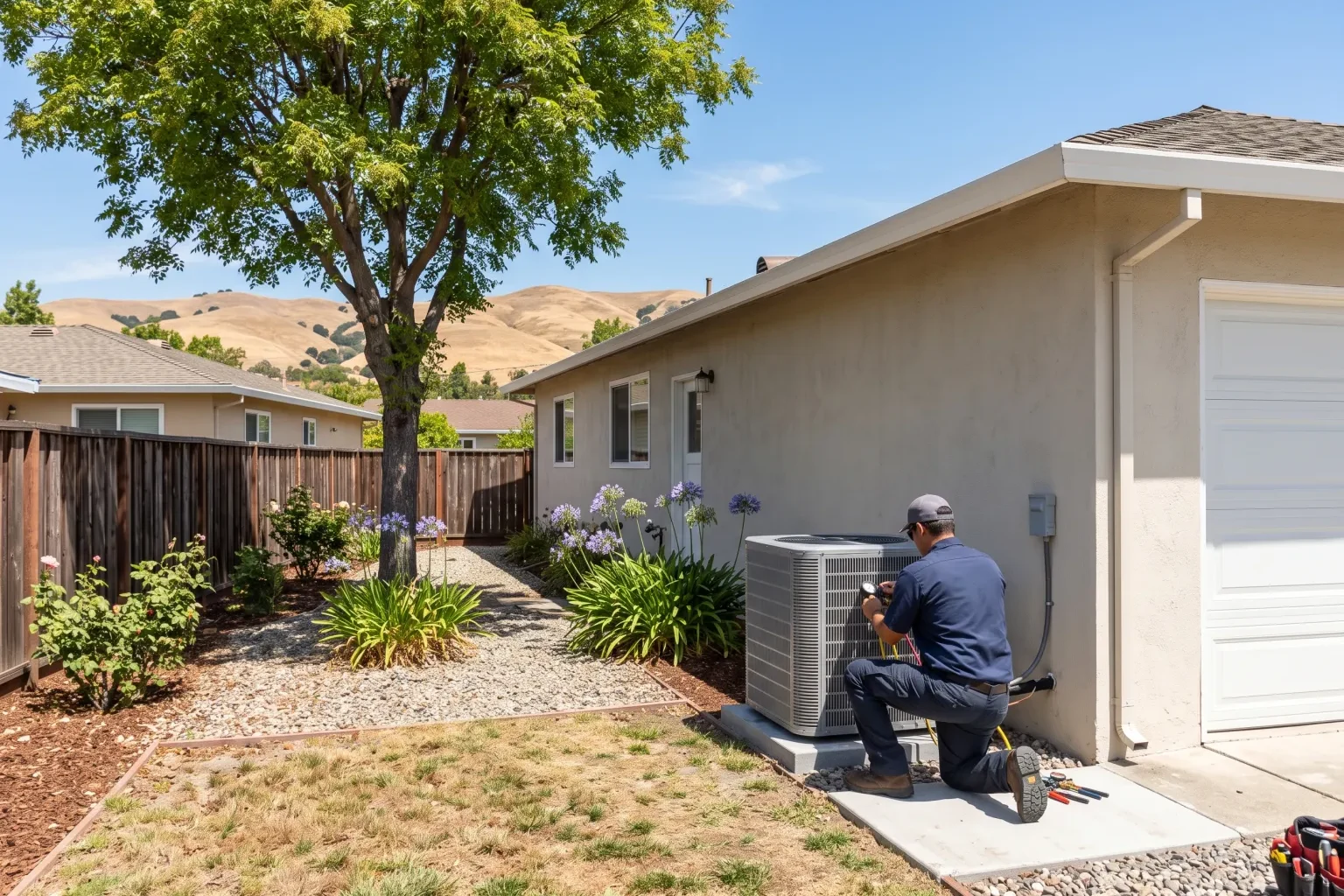
A heat pump is a good fit for most San Jose homes because the South Bay's mild winters and dry summers suit equipment that both heats and cools. We inspect your current system, ducts, and electrical panel before recommending a repair, a full replacement, or a hybrid setup. You get a written quote based on your home, not a guess.
A heat pump heats and cools your home with one system by moving heat instead of burning fuel. For many San Jose homeowners, it's a practical replacement for an aging furnace, an old air conditioner, or both. This page covers when a heat pump makes sense, what we look at before recommending one, how repair and replacement compare, what drives the cost of a project, and what to expect when we come out. If you're not sure you need a new system at all, we start there.
Signs It's Time to Consider a Heat Pump
Most people start looking at heat pumps when something stops working or starts costing more than it should. These are the common signs it's worth a conversation:
The South Bay's climate works in a heat pump's favor. Winters are mild and damp, and summers are dry. A properly sized heat pump can handle both seasons without the heavy heating demand that colder regions place on it.
- Your furnace or air conditioner is getting old and needs repairs more often.
- Your AC struggles on hot afternoons. This is especially common in inland and southern parts of the valley, where summers run noticeably hotter than areas near the Bay.
- Some rooms stay too warm or too cold no matter how you set the thermostat.
- You're planning to replace a gas furnace and don't want to face the same decision again in a few years.
- You want cooling but don't have central air today.
- You're adding solar, an electric water heater, or other electric appliances and want heating and cooling to match.
What We Check Before Recommending Equipment
A heat pump only performs as well as the house and ductwork around it. Before we recommend equipment, we look at:
If your home has no ducts, or the ducts aren't worth saving, we'll walk you through ductless mini-split options for the rooms that need them.
- Your current system: its type, age, and condition, and whether it's failing or just inefficient.
- Heating and cooling load: square footage, insulation, windows, sun exposure, and ceiling height. We size the system for your home instead of copying the old unit's size.
- Ductwork: leaks, damage, sizing, and whether existing ducts can carry the airflow a heat pump needs.
- Electrical service: panel capacity, available breaker space, and whether you need a dedicated circuit.
- Outdoor unit placement: clearance, noise near bedrooms or neighbors, drainage, and room for future service.
- Thermostat and control compatibility.
Repair, Replace, or Go Hybrid
Not every problem calls for a new system. Your existing heat pump might have a failed capacitor, a refrigerant leak we can find and fix, a worn fan motor, or a control problem. In those cases a repair may be the sensible choice, especially on a newer unit. We'll tell you what's wrong and what the repair involves.
Replacement makes more sense in a few situations: the system is near the end of its life, a major part like the compressor has failed, repairs keep piling up, or the unit was never sized right for the house. If you have a gas furnace and a separate AC, one heat pump can replace both with an outdoor unit and an indoor air handler.
Some homeowners prefer a dual-fuel setup that pairs a heat pump with a furnace that still runs well. That can be a reasonable step if the furnace is in good shape.
Local rules matter too. Under Bay Area Air District rules, gas furnaces manufactured from 2029 on must meet a zero-NOx emission standard. In practice, that points toward heat pumps when a furnace is replaced after that date. These rules don't require you to replace working equipment. They apply only when a furnace fails or is replaced. If you're also thinking about your water heater, the zero-NOx date for small water heaters was set for 2027, but the Air District Board is considering amendments in November 2026 that could delay it. Check the current rule before planning that replacement.
What Affects the Cost of a Heat Pump Installation
We quote every installation after we've seen the home. These factors move the cost the most:
Incentives can offset part of the project. Bay Area homeowners can check BayREN and their local clean energy provider for current heat pump and electrification incentives. Amounts and availability change with each funding cycle, so we confirm the current offer before including it in a quote. The federal Energy Efficient Home Improvement Credit (25C) only covered qualifying heat pumps placed in service before December 31, 2025. It isn't available for new installations after that date.
- System type: a ducted central heat pump, a ductless mini-split, or a combination of both.
- The capacity and efficiency level of the equipment.
- Duct condition: whether we can reuse the ducts as they are, need to repair and seal them, or need to replace them.
- Electrical work, such as a panel upgrade, new circuits, or new wiring runs.
- Removing the old equipment, including capping the gas line if a furnace comes out.
- Installation difficulty: attic or crawlspace access, refrigerant line length, and the pad or bracket for the outdoor unit.
- Permits and inspections your city requires.
How a Visit Works
Here's what to expect from your first call to a working system:
We serve San Jose and nearby cities, including Santa Clara, Sunnyvale, Campbell, Milpitas, Cupertino, and Los Gatos.
- Scheduling: we ask about your current system, what's bothering you, and the age of the home.
- Home assessment: a technician inspects your equipment, ducts, electrical panel, and outdoor space, then takes measurements for a load calculation.
- Options and quote: we explain your repair or replacement choices in plain terms and give you a written quote for each option you want to consider.
- Permits: we pull the permits your city requires for the work.
- Installation: we remove the old equipment, set the new indoor and outdoor units, and connect the refrigerant lines, wiring, and controls. We protect your floors and work areas throughout.
- Startup and walkthrough: we test airflow, refrigerant charge, and both heating and cooling modes. Then we show you how to use the thermostat and change the filter.
- Final inspection: we coordinate the city's final inspection.
Heat Pump Installation by city
- Heat Pump Installation in Santa ClaraLocal service & repairs
- Heat Pump Installation in CampbellLocal service & repairs
- Heat Pump Installation in SunnyvaleLocal service & repairs
- Heat Pump Installation in CupertinoLocal service & repairs
- Heat Pump Installation in MilpitasLocal service & repairs
- Heat Pump Installation in SaratogaLocal service & repairs
- Heat Pump Installation in Monte SerenoLocal service & repairs
- Heat Pump Installation in Los GatosLocal service & repairs
- Heat Pump Installation in Mountain ViewLocal service & repairs
- Heat Pump Installation in Los AltosLocal service & repairs
- Heat Pump Installation in FremontLocal service & repairs
- Heat Pump Installation in Los Altos HillsLocal service & repairs