
The short answer
If your home feels dusty, stuffy, or humid, or your allergies seem worse indoors, your HVAC system is often part of the cause. We inspect filtration, ductwork, coils, drainage, humidity, ventilation, and combustion safety, then recommend fixes that match what we actually find.
The air inside your home passes through your heating and cooling system many times a day, so the condition of that system has a lot to do with what you breathe. RapidBreeze HVAC Repair Service helps homeowners in San Jose and nearby cities find out why the air feels dusty, stuffy, damp, or stale, and what can realistically be done about it. The Santa Clara Valley has dry summers and mild, damp winters. That means dust and pollen in the warm months, closed-up houses in the cool months, and very different conditions from one season to the next. We look at your system and your home together, explain what we find in plain terms, and give you options that range from simple fixes to equipment upgrades.
Signs Your Home's Air Needs Attention
Indoor air problems are easy to get used to, so many homeowners don't notice them until a guest mentions a smell or someone in the house starts having more trouble with allergies. These are the signs we hear about most often, and each one points to something specific we can check.
None of these signs means you need expensive equipment. Often the cause is a loose filter, a leaky return duct, or a clogged drain line.
- Dust settles on furniture again within a day or two of cleaning
- A musty or sour smell when the system starts up, especially from vents
- Allergy or asthma symptoms that ease when you leave the house
- Rooms that feel stuffy or stale even when the temperature is right
- Condensation on windows during damp winter months
- Very dry air in the house, static shocks, or dry eyes and throat
- Visible dark spots around supply registers or on the ceiling near vents
- Lingering cooking or pet odors that don't clear out
- A furnace that produces soot, a yellow flame, or an unusual smell when it runs
What We Check During an Indoor Air Quality Visit
We start with the parts of your system that touch the air directly and work outward to the rest of the house. The goal is to find the source of the problem, not just treat the symptom.
If anything we find affects safety, such as signs of a cracked heat exchanger or poor venting on a gas furnace, we tell you right away and explain what it means before discussing anything else.
- Filter type, fit, and condition, including gaps that let air bypass the filter
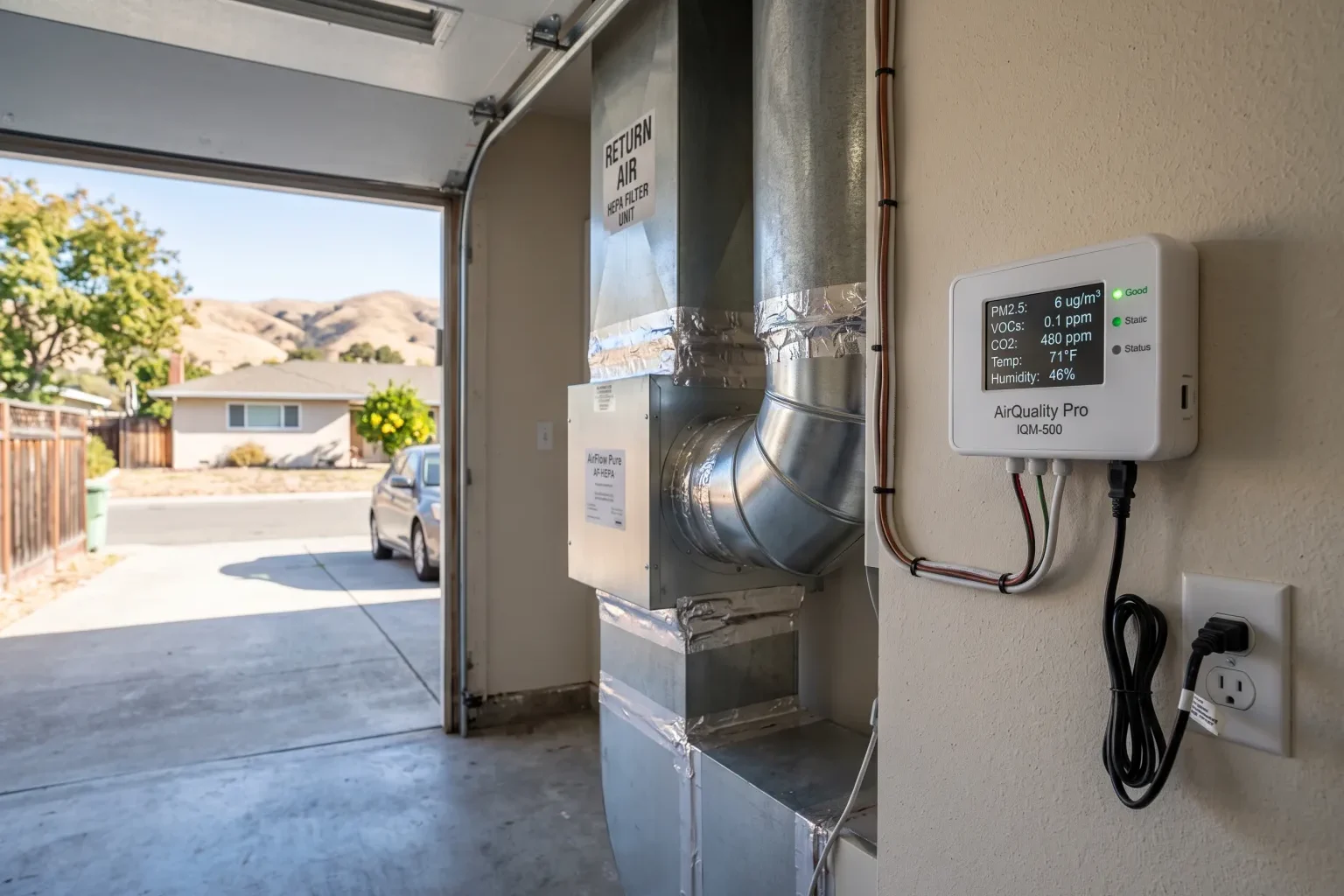
- Return air pathways and duct connections in the attic, crawlspace, or garage, where leaks can pull in dust and insulation fibers
- Evaporator coil and blower wheel for dirt buildup or microbial growth
- Condensate drain pan and line for clogs, standing water, or overflow
- Indoor humidity levels compared with what feels comfortable for the season
- Airflow at supply and return registers
- Fresh air ventilation, including bathroom and kitchen exhaust fans
- Gas furnace burners, flame, flue venting, and heat exchanger condition
- Presence and placement of carbon monoxide alarms
Repair, Upgrade, or Replace: Your Options
Most indoor air quality problems can be fixed without replacing your heating and cooling equipment. Common repairs include sealing leaky return ducts, cleaning a dirty coil or blower, clearing and re-sloping a condensate drain, and correcting a poorly fitted filter rack. These fixes often make the biggest difference for the least disruption.
If repairs alone won't get you where you want to be, upgrades are the next step. A deeper media filter cabinet can capture finer particles without choking airflow, but we check that your blower can handle a higher-efficiency filter first. Depending on what we find, we may also discuss a whole-home humidifier for dry months, better exhaust ventilation, or a balanced ventilation system that brings in filtered fresh air while exhausting stale air.
Replacement makes sense when the equipment itself is the problem, such as a furnace with a cracked heat exchanger or a system so mismatched to the house that it can't move air properly. Bay Area Air District rules do not require you to replace working equipment. They apply when a furnace fails or is replaced. Gas furnaces manufactured from 2029 on must meet a zero-NOx standard, which in practice points many homeowners toward heat pumps when they replace a furnace after that date. The federal 25C tax credit for heat pumps is not available for new installations after 2025, but BayREN and local clean energy providers may offer incentives. Those change by funding cycle, so we confirm what's currently available before including anything in a quote.
What Affects the Cost
We give you a written estimate after the inspection so you can compare options side by side. The main factors that change the cost are:
- Whether the fix is a repair, an add-on upgrade, or equipment replacement
- How accessible your ductwork and equipment are, such as a tight attic or crawlspace
- The extent of duct leakage or damage that needs sealing or replacement
- Whether the coil or blower needs cleaning in place or removal
- The type of filtration, humidity control, or ventilation equipment you choose
- Any electrical, venting, or framing changes needed to install new equipment
- Permit requirements for the work in your city
How a Visit Works
When you contact us, we ask what you're noticing, when it happens, and what kind of system you have. That helps the technician come prepared.
At your home, the technician walks through the problem with you, inspects the system and ductwork, and takes readings such as airflow and humidity. Afterward, we explain what we found, show you photos when that helps, and lay out your options from simplest to most involved. Simple fixes can often be done the same visit if you approve them. For larger work, we schedule a return visit and walk you through what to expect on installation day.